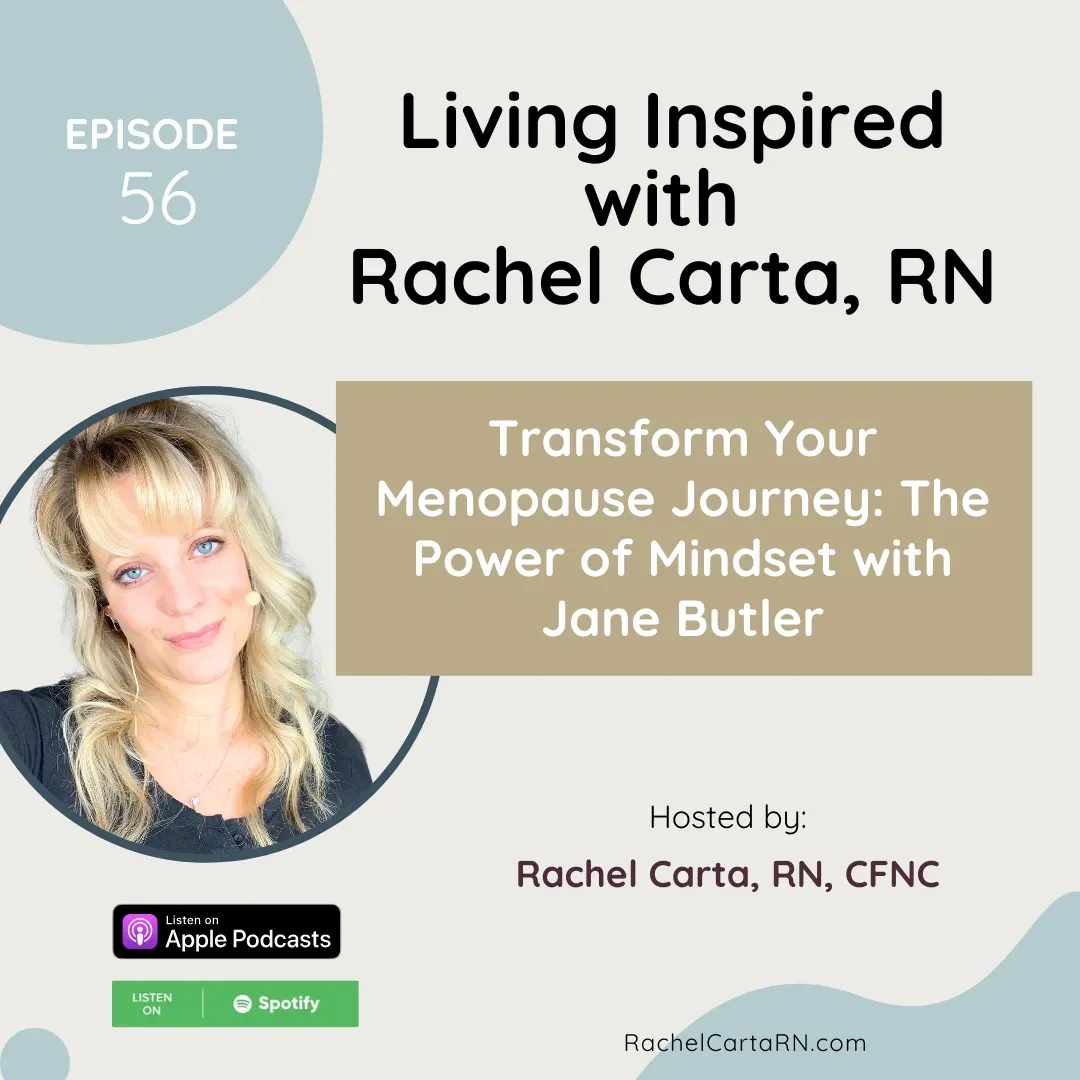
Transform Your Menopause Journey: The Power of Mindset with Jane Butler
If you're a women over 35 or have been navigating hormonal upheaval, you may have wondered if you were going crazy?
Or have you found yourself suddenly overwhelmed by emotions that seem to come from nowhere? Maybe you’ve experienced those unexpected moments of rage or mood swings that leave you feeling out of control.
Perhaps you’ve even struggled with brain fog, migraines, or heavy periods that seem to be anything but "normal."
I’ve been there too. It’s easy to feel like you’re going crazy, especially when symptoms seem to change from day to day or even hour to hour. Maybe you are even being told, "everything looks normal in your labs" but you KNOW something is off.
In this week's episode of the Living Inspired podcast, I sit down with Jane Butler, RN(Rt), MSc, Certified Health Coach. Jane has a fascinating background as a retired registered nurse with 40 years of experience, including expertise in cardiology, menopause, and sleep. What I love most about Jane is her unique ability to blend science-based strategies with a down-to-earth, practical approach. She helps menopausal women master their mindset and mindfulness, guiding them toward a healthier, more vibrant life without the overwhelm.
Navigating Perimenopause: It’s Not the End, It’s the Beginning
When Jane shares her story about going through perimenopause herself, it truly resonates with me. Like so many women, Jane was caught off guard by the rollercoaster of symptoms she experienced—excessive bleeding and an overall sense of losing control. As a nurse, Jane thought she knew what to expect, but when she found herself in the thick of it, she realized she had no idea what was going on. She even found herself questioning, "Am I actually losing my mind?"
This is so common. Perimenopause, the years leading up to menopause, can feel like a whirlwind. Symptoms can come on suddenly and hit you hard—everything from physical changes to emotional ones. But as Jane said in our conversation, “Menopause is happening for you, not to you.”
When you think about it that way, it shifts the entire perspective. This isn’t a “decline”; it’s a transformation. A transition to a new phase of life where you can thrive with the right mindset and the right tools.
From Confusion to Clarity: The Power of Mindset
One of the biggest misconceptions about menopause is that it marks the beginning of the end. Many women feel invisible or think that their best years are behind them. But Jane and I are here to tell you that it doesn’t have to be that way. In fact, menopause can be the catalyst for growth and a deeper understanding of who you are, what you want, and what your body needs.
The real secret? Jane says mindset. Your mindset will directly influence how you experience this transition. If you see it as a decline, you might feel hopeless or defeated. But if you shift your perspective and see it as an opportunity for transformation, suddenly the path ahead feels empowering. It’s about acknowledging the changes in your body and mind and giving yourself permission to honor them.
Jane shared that one of the biggest mindset shifts that women need to embrace is the idea that menopause is not a decline, but a transformation. It’s easy to think, "This is the end," but what if this is actually the beginning of a new chapter, one that’s full of growth, strength, wisdom, and clarity?
The first step, she suggests, is simply acknowledging that the change is happening. No need to resist it. Embrace it. Understand that your body is signaling a new phase of life, and there are ways to work with these signals, not against them.
The Hormone Roller Coaster: Understanding the Shift
Hormones—specifically estrogen and progesterone—are often at the center of menopause discussions. And yes, they play a huge role in how we feel. But as Jane shared, it’s not just about balancing hormones to make everything "perfect." Menopause is a complex time of hormonal shifts, and these hormones don’t always follow a straight line.
Think of your hormones like the lights on a Christmas tree. When one light flickers, the others follow suit. When estrogen starts to fluctuate, other hormones—like cortisol, which is linked to stress—can also be impacted. This cascade of hormone shifts can cause a range of symptoms, from mood swings to weight gain, and even things like brain fog, joint pain, or digestive issues.
One of the most important things we can do to manage these symptoms is to reduce stress and inflammation. Elevated cortisol levels (your stress hormone) can make inflammation worse, which can then intensify menopause symptoms. So, if you’re feeling constantly on edge, it’s time to take a step back and find ways to manage that stress. Even small changes—like getting outside for a walk or practicing deep breathing—can make a big difference in reducing inflammation and calming your body.
The Importance of Connection: Find Your Tribe
We often hear that menopause is something you go through alone, but Jane and I both believe the opposite. Community is essential, whether it’s talking to your partner, a close friend, or a coach who truly understands what you're going through. For many women, simply sharing their experiences with someone else can relieve a huge amount of stress and anxiety.
One of the main reasons women feel so isolated during menopause is because they often don't feel comfortable talking about it. Women might not want to discuss the changes they’re going through—whether it's physical, emotional, or both—because they feel embarrassed or fear being judged. But breaking that silence is a game changer. It’s time to stop pretending everything is fine when it’s not. Talk about it. Your symptoms may be completely normal, and simply sharing them with someone who gets it can feel incredibly freeing.
Simple Steps to Feeling Better: Start with Small Changes
It’s easy to feel overwhelmed by all the things we “should” be doing to manage our health. But, it’s not about adding more to your to-do list—it’s about making small changes that feel sustainable.
You don’t have to make huge changes all at once. Sometimes, the simplest things—like drinking enough water, taking a walk in nature, or getting more sleep—can have a profound impact on how you feel.
Consider the power of journaling. Even if it feels silly or unnecessary, journaling can be a powerful tool for self-reflection and understanding your body’s needs. When you take the time to sit with yourself and your thoughts, you may discover things that you didn’t even realize were affecting your health.
Ready to Dive Deeper?
If you’re feeling overwhelmed by perimenopause or menopause, you’re not alone. It’s time to start looking at this phase of life not as an ending, but as an opportunity for wisdom and growth. Whether you choose to speak with a coach, talk to a friend, or take small steps toward managing your symptoms, the key is to take action—no matter how small.
Listen to the episode here for more tips on managing your health during menopause, and be sure to check out Jane Butler’s Facebook group, Love Your Menopause with Jane, where you can connect with others navigating this transition.
If you’re experiencing symptoms like brain fog, mood swings, digestive issues, fatigue, or overwhelm, I invite you to schedule a Wellness Empowerment Session with me. Let’s dive into your unique health concerns and create a plan that works for you.
Lots of love,
Rachel
About Rachel Carta, RN
As a Registered Nurse, Author, Functional Nutrition Counselor, & Life Coach, I help women who are tired of feeling off—low energy, digestive issues, brain fog, mood swings, or just not feeling like yourself. You can wake up with energy. You can feel good again in your body. You can reconnect to the vibrant, grounded you. You don't have to do this alone.
About Jane Butler, RN(Rt), MSc, Certified Health Coach
As a retired Registered Nurse, Women’s Health Coach, and Author, Jane Butler helps menopausal women who are tired of feeling overwhelmed by symptoms like mood swings, hot flashes, and fatigue. You can navigate this phase with confidence, clarity, and energy. You can embrace midlife as a time of growth and fun—without the overwhelm. You don’t have to go through it alone. Jane combines over 40 years of health experience with practical, empowering strategies to help you feel your best. Find Jane in her FB Group: Love Your Menopause with Jane.